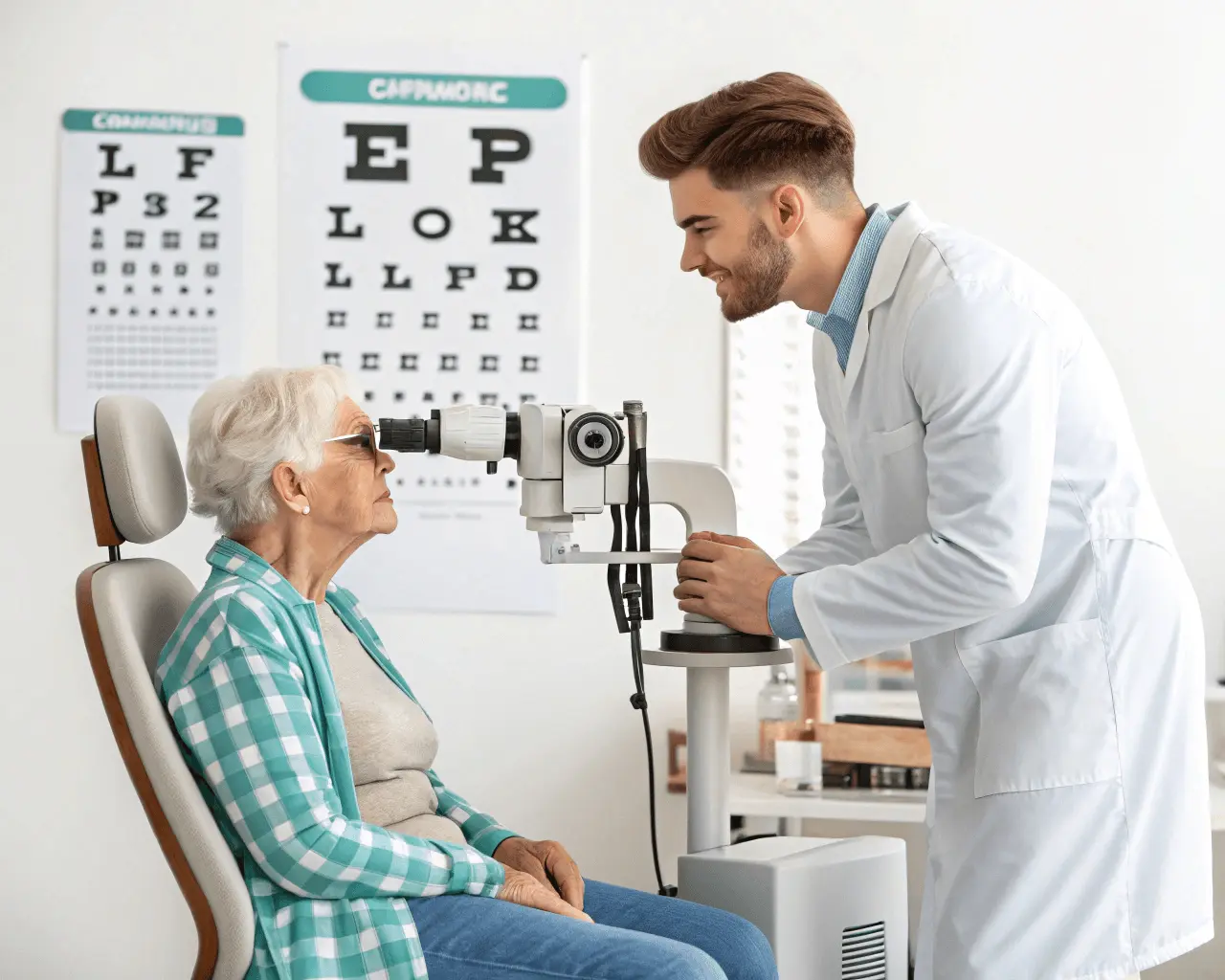
Eye care feels easier when you know which provider does what. An optometrist often helps with routine eye exams, glasses, contact lenses, first-line eye concerns, and referrals when needed. An ophthalmologist is a medical doctor trained to diagnose and treat eye disease, perform eye surgery, and manage complex medical eye problems.
If you are searching for an eye doctor, the right choice depends on your goal. A routine prescription update may start with an optometrist. Cataracts, LASIK, glaucoma progression, retinal disease, sudden vision loss, or eye surgery questions may call for an ophthalmologist. The best care path is not about choosing one title forever. It is about choosing the right starting point for today’s eye concern.
Experienced Nashville ophthalmologist and founder of Loden Vision Centers, Dr. James C. Loden, explains that comprehensive eye exams help patients understand their vision, recognize eye health needs, and move toward the right level of care with confidence.
Why optometrists are often the front door to eye care
Optometrists are often the front door to eye care because many patients first need help with everyday vision. They may notice blurry distance vision, trouble reading, headaches from near work, contact lens discomfort, dry eye symptoms, or gradual prescription changes. An optometrist can often evaluate those concerns, prescribe glasses or contact lenses, perform eye health screening, and decide whether the patient needs referral.
Nicolela and colleagues describe optometrists as professionals trained to perform routine eye examinations, refractions, and recognition of eye problems such as glaucoma, while ophthalmologists are medical doctors trained in eye disease and eye surgery [1].
That distinction helps patients understand the front-door role. Optometrists are often the first place people go when they need vision correction or when they are unsure whether a symptom is simple or medical.
Optometry has also expanded in many healthcare settings. Machon describes optometrists as primary healthcare practitioners for vision and eye care, with roles that include diagnosis, triage, use of diagnostic technology, and referral when appropriate [2].
Harris also explains that optometry has moved from traditional refractive care into broader primary eye care, supported by modern tools such as slit lamps, visual fields, pachymetry, gonioscopy, retinal imaging, and optical coherence tomography in many practices [3].
A front door is not a finish line. It is the place where the right care path begins.
How ophthalmologists diagnose, treat, and operate when eyes need more
Ophthalmologists diagnose, treat, and operate when eyes need more advanced care. They are medical doctors with specialized training in eye disease and eye surgery. This matters when a patient has cataracts, glaucoma that may need laser or surgery, retinal disease, corneal disease, complex inflammation, eye trauma, advanced diabetic eye disease, or elective surgical goals such as LASIK or refractive lens exchange.
An ophthalmologist becomes especially important when the next decision may involve medication, laser treatment, injections, surgery, or advanced disease management. Cataract surgery is performed by an ophthalmologist. LASIK, PRK, SMILE, EVO ICL, and refractive lens exchange require surgical evaluation and candidacy testing. Retina conditions may require imaging, injections, laser procedures, or surgery. Glaucoma may require drops, laser, minimally invasive glaucoma surgery, or other surgical approaches.
A patient may start with an optometrist and then move to an ophthalmologist when findings become complex. That handoff is not unusual. It is good care. It means the patient is being directed to the provider whose training fits the next decision.
The right eye doctor is the one who can answer the next clinical question safely.
When a referral is a sign of good care, not bad news
A referral is a sign of good care when the first provider sees something that deserves a deeper look. Patients sometimes hear “referral” and assume the worst. In reality, referral often means the provider is being careful, thorough, and honest about the level of care needed.
Collaborative referral models have been studied in multiple eye conditions. Jamous and colleagues found that a collaborative model for glaucoma patients and suspects helped improve appropriate referrals to ophthalmologists and supported better use of resources [4].
Ly and colleagues studied non-urgent macular disease referrals and found that an intermediate-tier optometric imaging clinic clarified many nonspecific diagnoses, while a smaller portion of patients still needed ophthalmologist referral [5].
Referrals can also protect patients from wasted time. A patient with a routine glasses issue should not be sent into a surgical pathway unnecessarily. A patient with a retinal warning sign should not wait for routine vision care when prompt ophthalmology evaluation is safer. A good referral helps match urgency, testing, and expertise.
A referral is not bad news. A referral is a safety bridge.
Why shared care can make follow-up easier
Shared care can make follow-up easier because eye care often works best as a team. Optometrists may provide routine exams, refraction, contact lens care, dry eye support, and monitoring for stable or lower-risk findings. Ophthalmologists may provide diagnosis confirmation, medical treatment, surgery, and specialty care for complex or progressing disease. When communication works, patients may get care that is both accessible and medically appropriate.
O’Connor and colleagues found that shared care for chronic eye diseases was generally accepted by optometrists, ophthalmologists, and patients, and patients reported savings in travel time and satisfaction with care [6].
Tahhan and colleagues found that a collaborative model for low-risk diabetic eye care reduced wait times and costs while maintaining substantial agreement between optometrists and ophthalmologists for diagnosis and management [7].
Shared care can also help after surgery. Loke and colleagues reviewed post-cataract co-management models and found that co-management between ophthalmologists and optometrists has been feasible and safe in some countries when supported by clear referrals, workflow guidelines, training, collaboration, and patient feedback [8].
Shared care works best when it is organized. Patients need clear instructions, consistent terminology, understandable follow-up schedules, and confidence that each provider knows what the other has found.
The strongest eye care team does not make patients repeat the same story. It helps the story move forward.
How cost, insurance, and convenience shape real-life choices
Cost, insurance, and convenience shape real-life choices because patients do not choose eye care in a vacuum. A routine vision exam may be billed differently than a medical eye exam. Contact lens fittings, retinal imaging, glaucoma testing, dry eye treatment, LASIK evaluations, cataract consultations, and surgical follow-up may each involve different coverage rules. The reason for the visit often affects how the visit is scheduled and billed.
Convenience also matters. A patient may choose an optometrist for a routine exam because it is easier to schedule. A patient may choose an ophthalmologist because symptoms are complex or surgery is being considered. A patient with diabetes may need a care path that supports regular monitoring. A patient with glaucoma risk may need pressure checks, visual fields, imaging, and a clear follow-up rhythm.
Research suggests that better referral information can reduce unnecessary delays. Goudie and colleagues found that attaching digital images to optometry referrals improved triage quality, helped detect sight-threatening disease earlier, and allowed more appropriate allocation to specialist clinics [9].
Carrasco Solís and colleagues found that primary-care eye referrals included many potentially avoidable referrals, including refractive errors, supporting the role of better triage and optometry involvement in improving ophthalmology resource use [10].
Practical care is still medical care. The best appointment is the one that fits the patient’s eye needs, financial reality, urgency, and long-term plan.
When your symptoms tell you which door to open first
Your symptoms can often tell you which door to open first. Gradual blurry vision, contact lens needs, routine glasses updates, mild dry eye symptoms, and stable vision questions may begin with an optometrist. Cataract symptoms, LASIK or refractive surgery questions, known eye disease, complex medical history, surgical planning, or advanced treatment concerns may point toward an ophthalmologist.
Some symptoms should move faster than either routine path. Sudden vision loss, new flashes with many floaters, a curtain or shadow in vision, severe eye pain, new double vision, eye injury, chemical exposure, or painful redness should prompt urgent medical eye advice. These symptoms are not routine scheduling problems. They are safety questions.
Patient goals also matter. A person who wants glasses needs a refraction. A person who wants contact lenses needs a fitting and eye surface evaluation. A person who wants LASIK needs surgical candidacy testing, dry eye evaluation, corneal mapping, prescription stability review, risk discussion, cost conversation, and comparison with alternatives such as glasses, contact lenses, PRK, SMILE, EVO ICL, or refractive lens exchange. A person with cataracts needs a different conversation about lens options, recovery, visual goals, and timing.
The best first door is the one that leads to the right next question.
The final takeaway is simple. Optometrists often serve as the first stop for routine vision care, glasses, contacts, and many first-line eye concerns. Ophthalmologists diagnose, treat, and operate when medical or surgical eye care is needed. Shared care can make the process smoother when each provider’s role is clear. Patients do not need to memorize medical titles. They need to know what their eyes are asking for today.
References
[1] “Model of Interprofessional Collaboration in the Care of Glaucoma Patients and Glaucoma Suspects,” by M. Nicolela, C. Birt, Shawn L. Cohen, B. Ford, and C. Lajoie, 2011.
[2] “Optometrists’ Scope of Practice,” by Kirsty Machon, 2017.
[3] “The Boundaries of Optometric Practice,” by A. Harris, 2014.
[4] “Clinical Model Assisting With the Collaborative Care of Glaucoma Patients and Suspects,” by Khalid F. Jamous, M. Kalloniatis, M. Hennessy, A. Agar, A. Hayen, and B. Zangerl, 2015.
[5] “Collaborative Care of Non-Urgent Macular Disease: A Study of Inter-Optometric Referrals,” by Angelica Ly, L. Nivison-Smith, M. Hennessy, and M. Kalloniatis, 2016.
[6] “Shared Care for Chronic Eye Diseases: Perspectives of Ophthalmologists, Optometrists and Patients,” by P. O’Connor, C. Harper, C. Brunton, S. Clews, S. Haymes, and J. Keeffe, 2012.
[7] “Evaluating the Cost and Wait-Times of a Task-Sharing Model of Care for Diabetic Eye Care: A Case Study From Australia,” by N. Tahhan, Belinda K. Ford, B. Angell, G. Liew, Joseph Nazarian, G. Maberly, P. Mitchell, Andrew J. R. White, and L. Keay, 2020.
[8] “Co-Management of Post-Cataract Surgery Patients Between Ophthalmologists and Optometrists: A Scoping Review,” by Wan Ting Loke, S. Yew, Zhi Wei Lim, B. Lim, Charmaine Chai, Victor Teck Chang Koh, D. Chen, and Y. Tham, 2025.
[9] “Ophthalmic Digital Image Transfer: Benefits to Triage, Patient Care and Resource,” by C. Goudie, D. Lunt, Suzanna Reid, and R. Sanders, 2014.
[10] “Analysis of Patient Referrals From Primary Care to Ophthalmology. The Role of the Optometrist,” by Rafael Carrasco Solís, María Rosario Rodríguez Griñolo, Beatríz Ponte Zúñiga, Beatriz Mataix Albert, María Leticia LLedó de Villar, Rocío Martínez de Pablos, and Enrique Rodríguez de la Rúa Franch, 2024.