Most people treat their walls as an afterthought — a blank surface to fill once the sofa arrives and the rug is positioned. But in 2025, a quiet shift is underway. According to research tracked across the wall decor industry, 58% of consumers now prefer custom or personalized art over mass-produced prints. That number is not a marketing claim. It reflects something genuine: the growing sense that a home should feel like it belongs to you, not to a furniture catalog.
This article is for anyone who has looked at their living room wall and thought it was missing something they couldn’t quite name. That something is usually meaning. Here is how to find it — and two very different ways to put it on your walls.
Two Pathways to Personalized Art: Create It or Commission It
For homeowners who want their space to reflect a personal story rather than a retail catalogue, there are now two clear routes: make it yourself, or commission something made by hand. These are not competing ideas. They serve different people, different moods, and different budgets. One path is a creative experience; the other is an investment in a finished piece. Both result in art that carries weight.
Paint It Yourself — The Custom Kit Route
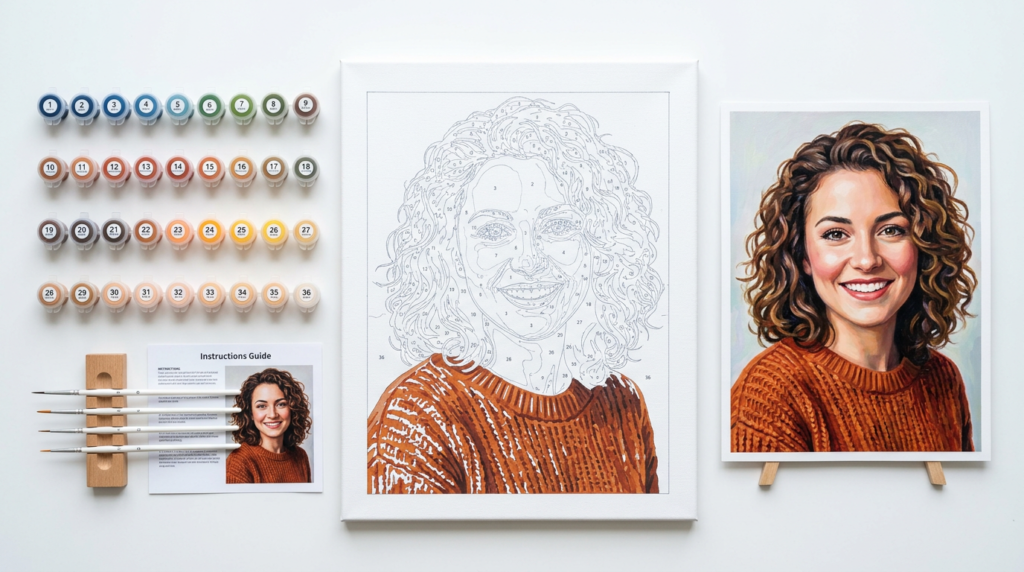
Custom paint-by-numbers kits work on a simple premise: you upload a photograph, and a provider converts it into a numbered canvas pre-printed with color zones, then ships you that canvas along with a matching set of numbered acrylic paints and brushes. You fill in the numbers. When finished, the photograph you submitted has become a painting — your painting.
The process typically takes six to twelve hours spread across several sessions. It requires no prior skill or artistic training — four out of five customers report having never painted before and still producing results they were proud to hang. The appeal is not just the finished product. The act of painting — slow, focused, repetitive in a meditative way — has its own value, which is covered in more detail in the mental health section below.
For anyone wanting to explore this approach, Number Artist personalized art kits offer three complexity levels (24, 36, or 48 colors), multiple canvas sizes, and both framed and rolled delivery options. The service has fulfilled orders for more than 350,000 customers with over 15,000 verified reviews, making it one of the more established options in this space. The subject can be a family photo, a pet portrait, a travel memory, or any image that carries meaning for the person who will hang it.
Hang Something Extraordinary — The Original Art Route
Not everyone wants to spend a weekend painting. Some people want a finished piece that commands the room from day one — something with the texture, depth, and presence that a printed reproduction cannot replicate.
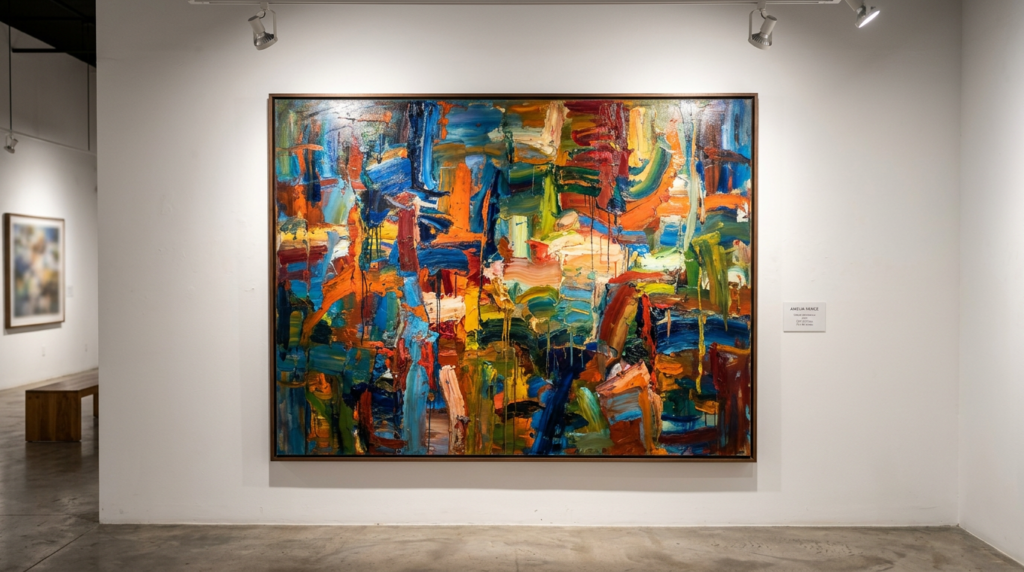
Original, handmade, large-format paintings deliver exactly that. The difference between a high-resolution print and an original oil or acrylic canvas is immediately visible when you stand close to it: brushwork, layering, subtle color variation, and physical texture. These are qualities that photographs of paintings cannot fully capture. In person, an original piece has a quality that is difficult to define but immediately felt.
For shoppers looking for large artwork for wall spaces — living rooms, dining rooms, primary bedrooms, entryways — Art by Maudsch offers 100% handmade pieces produced with oil and acrylic paints, with no digital printing involved. Each canvas ships worldwide. At the scale these pieces operate — genuinely large, designed to fill and anchor a wall — they function less like decoration and more like architecture. The wall becomes intentional.
Room by Room: Where Personalized Art Makes the Biggest Impact
Choosing the right piece is half the equation. Knowing where to put it is the other half.
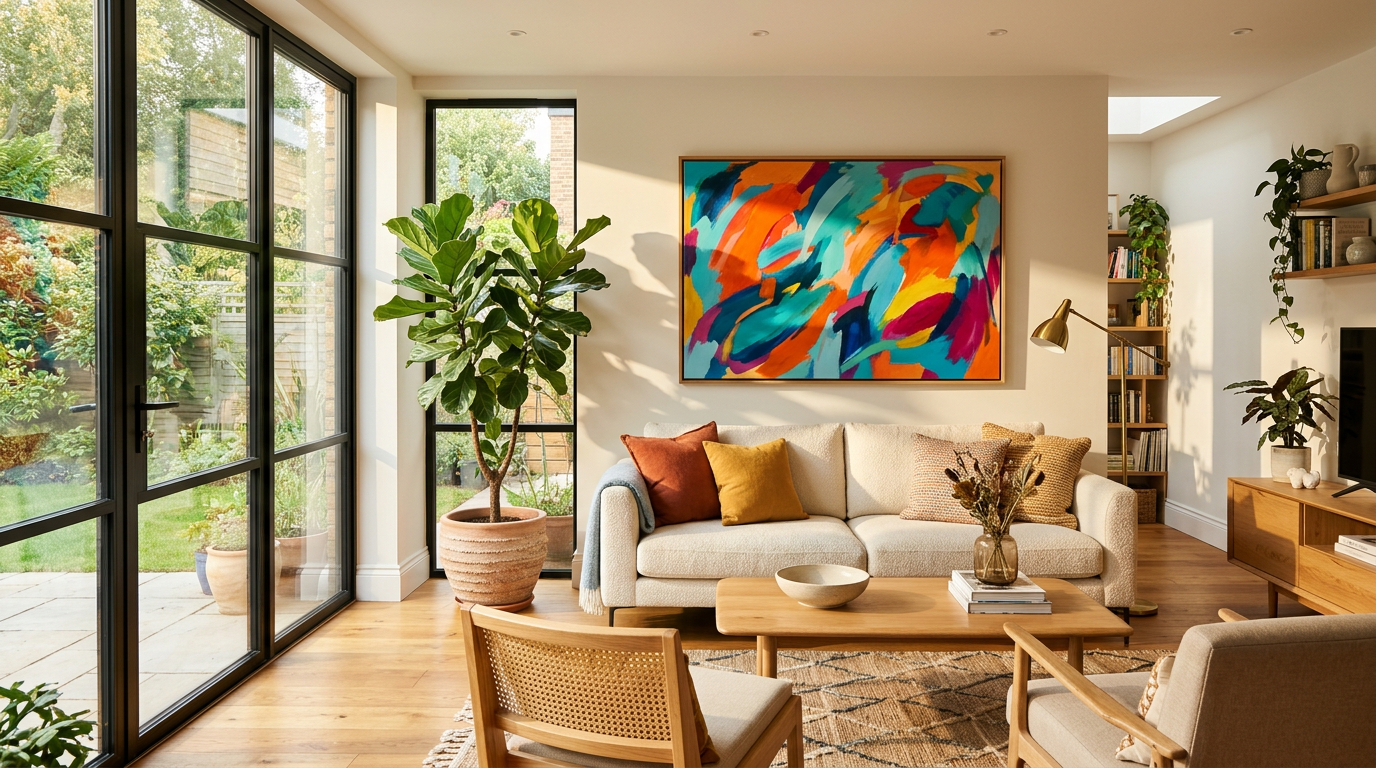
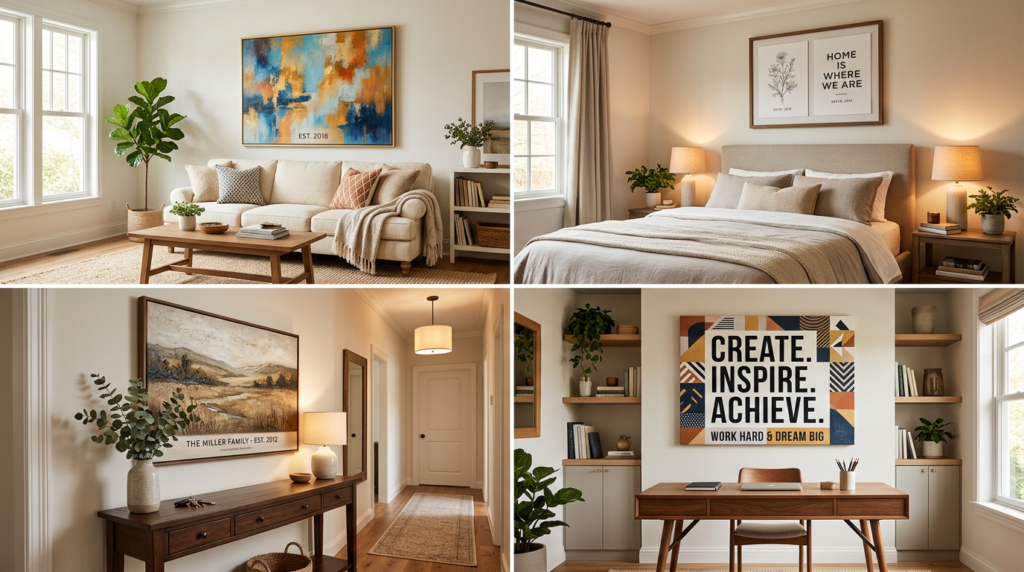
Living room. The wall above the sofa is the most prominent display surface in most homes. Interior designers consistently recommend that art spanning approximately two-thirds the width of the sofa below it achieves the most balanced look. This is where a large-format original painting or a sizable custom canvas makes the strongest argument — it anchors the room and gives guests something to look at and ask about. For practical guidance on scale and placement, Decorilla’s designer guide to choosing art is a useful reference.
Bedroom. The most personal room in the house. A custom painting of a shared memory — a place you traveled, a photo from a significant moment, a portrait — works particularly well here because it belongs specifically to you and your household. Scale matters: a piece that fills the wall above the headboard transforms the room without requiring any other changes.
Entryway and hallway. First impressions are formed in the first few seconds of entering a home. A single strong piece in an entryway sets the tone for everything beyond it. This is a space where original art with visual complexity rewards repeated viewing — you and your guests pass it daily.
Home office. Art in a workspace is underestimated. A piece that reflects your identity or inspires you keeps creative energy alive during long days. It also communicates something specific and personal to anyone who appears on a video call behind you.
Sizing rule of thumb: hang the center of any piece at average eye level (roughly 57–60 inches from the floor). Allow six to twelve inches of clearance between the top of furniture and the bottom of the frame. When in doubt, go larger — undersized art looks lost; art at the right scale looks inevitable.
How to Choose the Right Personalized Art for Your Space
Start with the wall, not the art. Measure the width and height of the intended wall space before browsing. A piece that is too small for the wall it occupies looks unintentional — and unfortunately, undersized art is one of the most common decorating mistakes made in otherwise well-designed rooms.
Consider the room’s color palette. Art does not need to match your sofa cushions, but it should exist in a considered relationship with the surrounding colors. Complementary tones create harmony; deliberate contrast creates energy. Both are valid, depending on the mood you want the room to have.
For custom painted kits, choose a photograph with a clear subject, strong contrast, and ideally a resolution above 1000 pixels on the longest side. Close-up portraits and images with defined backgrounds convert well; complex crowd scenes with many small faces are more challenging.
For original large-format paintings, consider how lighting interacts with the piece. Oil and acrylic paintings with texture catch light differently at different times of day — this is part of their appeal, but it means they reward placement on walls that receive natural light or quality directional lighting rather than harsh overhead fluorescents.
The most important selection criterion is staying power. Choose a subject or style that you expect to connect with in five years, not just one that feels on-trend right now. Personalized art, by definition, draws from your own life and taste — which makes it more durable than trend-driven purchases.
Why Personalized Art Has Become the Defining Home Decor Trend
The numbers behind this trend remain striking. The global personalized gifts market was valued at approximately $32–34 billion in 2025 and is projected to reach $52–63 billion by 2032, according to SkyQuest and TechNavio research. Wall art sits at the intersection of that growth and a parallel rise in interior design ambition. The global wall décor market is expected to surpass a valuation of around $70.9 billion by 2027.
The driver is not purely aesthetic. People have spent more time in their homes since the mid-2020s, and they have become more deliberate about what surrounds them. Generic prints from big-box retailers feel out of place in a space you actually live in. There is a growing awareness — supported by interior designers and backed by consumer data — that art sets the emotional tone of a room as powerfully as furniture or color palettes.
The 2025–2026 interior design consensus, as documented by leading trend analysts, is that large-scale, bold, statement-making pieces are no longer a luxury category. They are becoming a baseline expectation for any thoughtfully designed home.
The Surprising Mental Health Case for Art in Your Home
The reasons to invest in meaningful wall art go beyond aesthetics. The relationship between creative activity and mental wellbeing is well-documented.
A study on therapeutic painting found that a 45-minute art-making session reduced cortisol — the body’s primary stress hormone — by 75% in participants, regardless of their prior experience with art. That figure is significant. The source of that cortisol reduction appears to be the focused, repetitive nature of art-making: it produces something close to a flow state, where conscious worry is displaced by present-moment attention.
Mind, the UK mental health charity, recognizes arts and creative therapies as legitimate tools for managing anxiety, depression, and stress. A 2025 systematic review published in PMC examining crafts-based interventions found consistent positive effects on wellbeing across study populations. This is not alternative wellness advice — it is evidence-based.
The passive dimension matters too. The art you choose to surround yourself with shapes your emotional environment every day. Psychologists who study environmental design have documented the effect of meaningful objects and imagery on mood regulation and sense of identity. A generic print contributes nothing to this; a painting of your own photograph, or a handmade original piece chosen because it moved you, contributes something real.
For custom paint-by-numbers specifically, the act of creating the piece adds another layer. You will have spent hours with that canvas before it goes on the wall. The finished painting carries a memory of making it — which is why people who complete these kits tend to display them prominently.
Make Your Walls Mean Something
Personalized art is not a trend from last year in the sense that it will be replaced by something else in 2026. It is a return to the older idea that a home should reflect the people who actually live in it — their memories, their taste, their sense of what is beautiful. The trend is not personalized art itself; it is the recognition that this was always what art in the home was for.
There are two ways to act on that recognition: pick up a brush and spend a few evenings creating something from a photo that matters to you, or find an original work by a living artist that stops you when you walk past it. Neither is the wrong answer. Both result in walls that tell your story rather than a retailer’s.