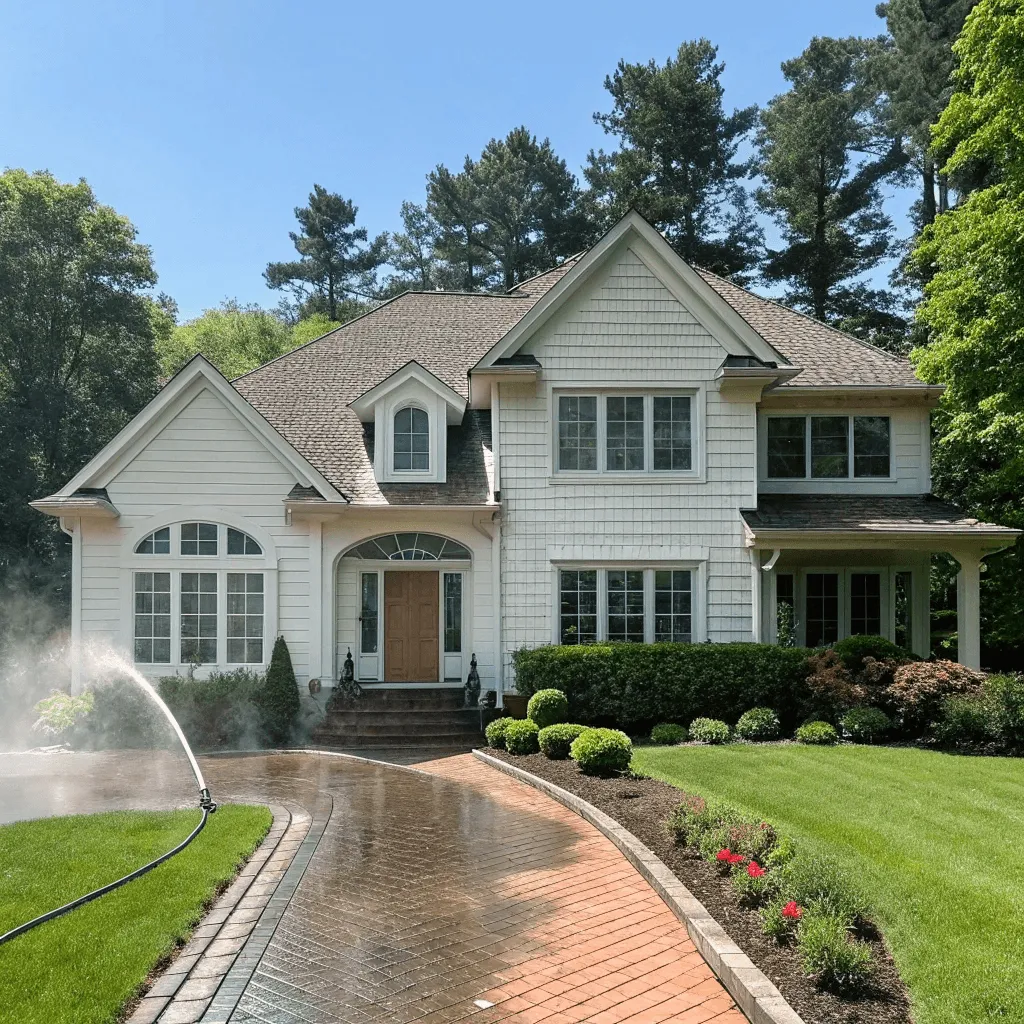
New Jersey’s four-season climate is beautiful — but it’s also relentless on the exterior of your home. From winter road salt and ice melt tracked onto driveways, to spring pollen coating every surface, to summer humidity feeding mold and mildew growth, to fall leaves decomposing against siding and gutters — the cumulative effect on your home’s exterior is significant. Annual power washing isn’t a luxury; for NJ homeowners, it’s a core part of responsible home maintenance.
What Power Washing Actually Does
Power washing — also called pressure washing — uses high-pressure water to remove dirt, algae, mold, mildew, moss, and other organic buildup from exterior surfaces. When done correctly by a trained professional, it’s safe for a wide range of materials including vinyl siding, brick, concrete driveways, wood decks, patios, and walkways.
The key word is “correctly.” Improper pressure settings or technique can damage siding, strip paint, or force water behind cladding — creating moisture problems that are far more expensive to fix than the original cleaning would have cost. This is why professional application matters.
The Real Costs of Skipping It
Many homeowners treat power washing as optional — something to do when the driveway looks visibly dirty. But the damage caused by neglect is often invisible until it becomes expensive.
Mold and mildew don’t just look bad — they degrade siding materials over time and can work their way into wall cavities if left unchecked. In NJ’s humid summers, algae and mildew growth on north-facing or shaded surfaces can accelerate significantly within a single season.
Algae on roofs is a particularly costly problem. The dark streaking you see on asphalt shingles is typically Gloeocapsa magma, a type of algae that feeds on the limestone filler in shingles. Left untreated, it shortens roof lifespan and can void manufacturer warranties. Soft-wash roof cleaning — a lower-pressure method using cleaning solutions — addresses this without damaging shingles.
Driveways and walkways accumulate oil stains, tire marks, and embedded grime that standard rain doesn’t remove. Beyond aesthetics, algae and moss growth on concrete and pavers creates slip hazards, particularly in wet conditions.
Deck and fence surfaces are especially vulnerable. Wood that isn’t cleaned and sealed regularly absorbs moisture, leading to warping, cracking, and accelerated rot. Power washing is typically the first step before any deck staining or sealing project.
Why Annual Scheduling Makes Sense
The most effective approach is to schedule power washing as a recurring annual service — typically in spring after winter’s damage has accumulated, or in early fall before the wet season sets in. Consistent annual cleaning prevents the kind of heavy buildup that requires more aggressive (and more expensive) treatment to remove.
Homeowners searching for power washing services near me in Morris County, NJ benefit from working with a local contractor who understands the specific environmental conditions of the region — the clay-heavy soils, the tree canopy density, and the particular mold and algae strains common to northern New Jersey.
What a Professional Service Covers
A comprehensive exterior cleaning service typically includes house siding, driveways and walkways, patios and pool decks, fences, and roof soft-washing. Some providers also offer gutter cleaning as part of a bundled exterior maintenance package — a smart add-on given that clogged gutters are one of the leading causes of foundation and fascia damage in NJ homes.
Investing in annual power washing protects your siding, extends your roof’s lifespan, preserves your hardscaping, and keeps your home looking its best year-round. For Morris County homeowners, it’s one of the highest-return maintenance habits you can build.